What NOT to Wear in Mediterranean Cruise Ports (Dress Code Mistakes Tourists Make)
By Jason Moon · February 26, 2026 · 7 min read
TL;DR (source: Visit Dubrovnik)
Dress code mistakes tourists make at Mediterranean cruise ports. What to wear for church visits, fortress climbs, cobblestone streets, and the heat. Practical packing advice for cruise port days. (More on Walls of Dubrovnik)
The Dress Code Problem Nobody Warns You About
Your cruise line tells you what to wear at dinner. Nobody tells you what to wear at port. And the wrong clothing choice can turn a great port day into 8 hours of blisters, sunburn, refused entry, or worse. (Dubrovnik Port Authority) According to Dubrovnik Port Authority, Dubrovnik received over 1.1 million cruise passengers in 2023, making it the most-visited cruise port in Croatia.
Mediterranean cruise ports combine three challenges that don't exist at a beach resort: religious sites with strict dress codes, medieval streets designed for donkeys not sneakers, and summer heat that can reach 40+ degrees Celsius. Your outfit needs to handle all three, sometimes in the same morning.
Mistake #1: Flip-Flops and Smooth-Soled Sandals
This is the biggest mistake, and it causes actual injuries every cruise season. Mediterranean ports are full of surfaces that destroy flip-flops and smooth soles:

- Kotor's fortress: 1,350 stone steps, many polished smooth by centuries of foot traffic. Flip-flops here are dangerous.
- Santorini's donkey path: 587 cobblestone steps shared with donkeys. The surface is slippery with... well, donkey residue. Smooth soles are a recipe for disaster.
- Dubrovnik's city walls: 1.9 km of uneven stone surface at elevation. Ankle-twisting opportunities everywhere.
- Venice: Bridge steps and wet stone quaysides. Venice has over 400 bridges, most with stone steps worn smooth over centuries.
What to wear instead: Comfortable walking shoes with rubber soles and good grip. They don't need to be hiking boots -- lightweight trail shoes, supportive sandals with heel straps and textured soles (Tevas, Chacos, or similar), or broken-in sneakers all work. The key is grip and ankle support.
Mistake #2: Tank Tops and Shorts at Religious Sites
Many of the Mediterranean's best sights are churches, cathedrals, mosques, and monasteries. Nearly all of them enforce dress codes, and they will refuse entry if you don't comply.
Many of the Mediterranean's best sights are churches, cathedrals, mosques, and monasteries. Nearly all of them enforce dress codes, and they will refuse entry if you don't comply.
The general rule across all Mediterranean religious sites:
- Shoulders must be covered (no tank tops, spaghetti straps, or strapless tops)
- Knees must be covered (no shorts above the knee, no mini skirts)
- Some sites also require covered midriffs
Sites that strictly enforce this:
- St. Peter's Basilica, Vatican (from Civitavecchia): Guards check at the entrance. No exceptions.
- Blue Mosque, Istanbul (from Kusadasi): Head coverings required for women (provided free at the entrance), shoes removed, legs and shoulders covered.
- Meteora monasteries (from Volos/Thessaloniki): Long skirts required for women, long trousers for men. Wraps provided but uncomfortable in heat.
- Cathedral of Saint Tryphon, Kotor: Shoulders and knees covered.
- Dubrovnik Cathedral: Shoulders and knees covered.
The solution: Carry a lightweight scarf or shawl in your day bag. A thin cotton or linen scarf weighs almost nothing, takes up no space, and can be wrapped around bare shoulders or tied as a sarong over shorts in about 10 seconds. This single item solves the dress code problem at every religious site in the Mediterranean.
Mistake #3: All Black in August
Black absorbs heat. Mediterranean summer temperatures regularly hit 35-40 degrees Celsius. Wearing all-black clothing on a port day in July or August is a recipe for heat exhaustion, especially if you're doing any kind of climb or extended walking.

What to wear instead: Light-colored, loose-fitting clothing in breathable fabrics. Linen and cotton are ideal. Light gray, white, khaki, and pastels reflect heat instead of absorbing it. The temperature difference between a black cotton t-shirt and a white linen shirt in direct Mediterranean sun is genuinely significant -- 5-8 degrees Celsius on the fabric surface.
Mistake #4: New Shoes on Day One
This sounds obvious but people do it constantly. They buy new walking shoes or sandals for the cruise and wear them for the first time on day one at port. By noon they have blisters. By 2:00 PM they're limping. The rest of the cruise involves painful feet at every subsequent port.
The rule: Wear your port day shoes at least 5-6 times at home before the cruise. Walk at least 5 km in them. If they cause hot spots or rubbing, you'll discover it in your living room instead of on the cobblestones of Dubrovnik.
Mistake #5: No Sun Protection Strategy
Northern European and North American cruisers consistently underestimate Mediterranean sun. The UV index in the eastern Mediterranean from June through September ranges from 9-11 ("very high" to "extreme"). For comparison, a sunny summer day in London is typically 5-6.
What this means in practice:
- Sunburn happens in 15-20 minutes for fair-skinned people without protection
- Sunstroke is a real risk during fortress climbs and wall walks with no shade
- Reflected heat from stone surfaces (city walls, marble ruins, limestone streets) intensifies the effect
What to bring:
- SPF 50 sunscreen, applied before you leave the ship and reapplied every 2 hours
- A hat with a brim (not a baseball cap, which leaves the back of your neck exposed)
- Sunglasses with UV protection
- A refillable water bottle -- dehydration accelerates sunburn's effects
Mistake #6: Carrying Too Much
A heavy bag makes everything worse. Your shoulders ache, your back sweats, and the extra weight destroys your feet faster on cobblestone streets. Some cruisers bring full backpacks loaded with "just in case" items they never use.
The ideal port day bag contains:
- Phone and charger/battery pack
- Sunscreen
- Water bottle
- Scarf/shawl for religious sites
- 20-50 EUR in cash
- Credit/debit card
- Ship card (for re-boarding)
- Sunglasses and hat
That's it. A small crossbody bag or minimal daypack handles all of this. Leave the full-size backpack, the DSLR camera (your phone is fine), and the "just in case" rain jacket on the ship.
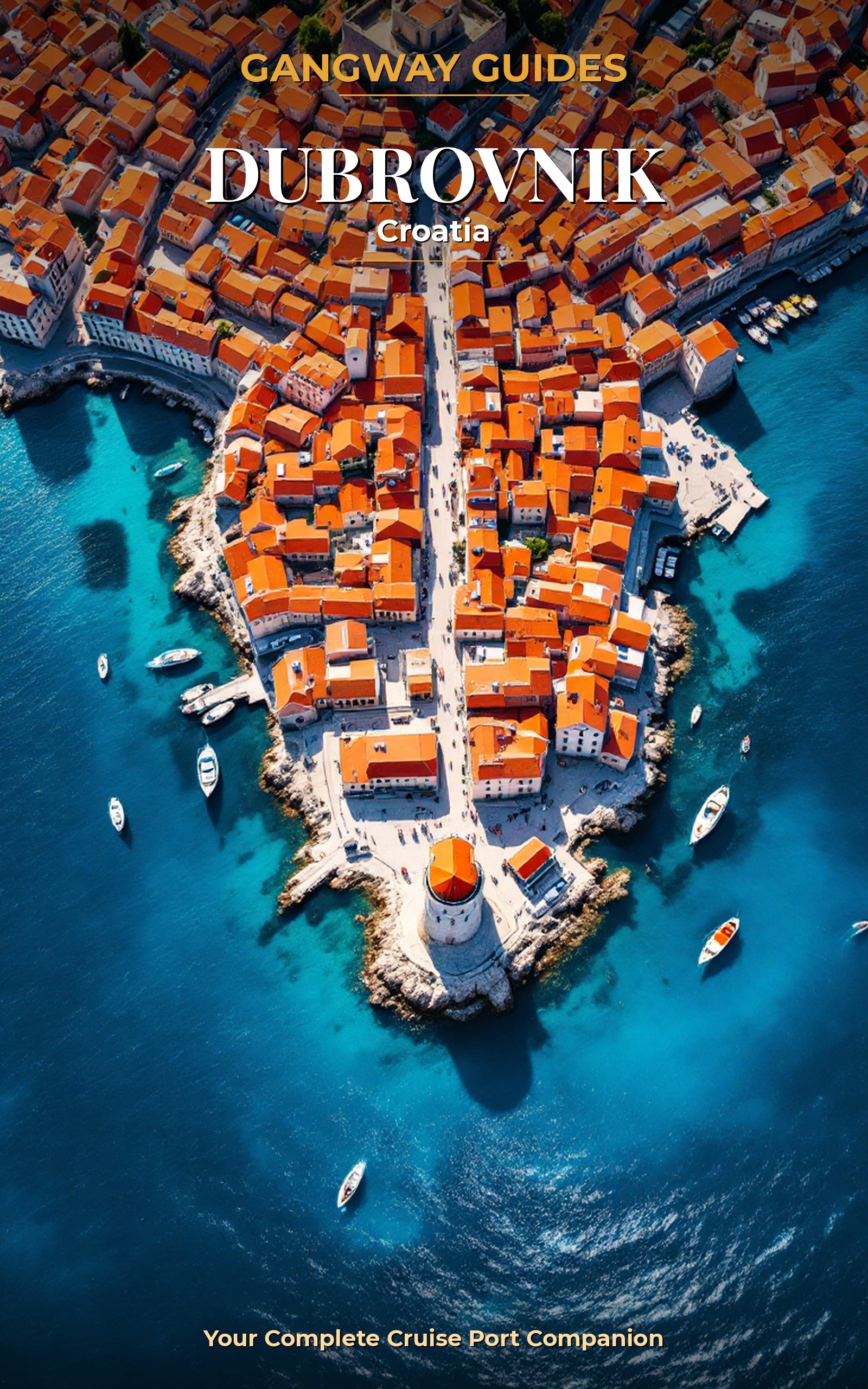
For a complete, item-by-item port day packing list with specific product recommendations for European, Atlantic island, and Caribbean ports, check our Dubrovnik guide -- it includes a section on packing specifically calibrated for walking-heavy port days in the Adriatic.
The One-Outfit Formula That Works Everywhere
If you want a single outfit that handles every Mediterranean port situation -- churches, climbs, cobblestones, and cafes -- here it is:
- Lightweight linen or cotton trousers (knee-length or longer) in a light color
- A breathable t-shirt or linen shirt with short sleeves (covers shoulders for churches)
- Walking shoes with rubber soles and ankle support
- A wide-brimmed sun hat
- A small scarf in your bag (for extra-strict religious sites)
It's not glamorous. It won't win any fashion awards. But you'll walk comfortably, get into every church, survive the heat, and actually enjoy your port day instead of fighting your clothing.
Based on our personal visits and research, we have compiled the most common questions below.
| Tip | Detail |
|---|---|
| Arrival time | Ships typically dock 7–8 AM |
| Walk to center | 10–30 minutes (port dependent) |
| Must-bring | Comfortable shoes, water, sunscreen |
| Cash needed | 20–50 EUR for small purchases |
| Return by | 30 minutes before all-aboard time |
Based on our personal visits and research, we have compiled the most common questions below.
Frequently Asked Questions
Is this port walkable from the cruise terminal?
Most Mediterranean cruise terminals are within 5-30 minutes walk of the main attractions. The walking distance and route quality vary by port. Our detailed port guides include step-by-step directions from the terminal with estimated walking times.
How much time do you need at this port?
Most cruise ships give you 6-10 hours in port. The itineraries in our guides are designed to fit within a standard port call, with options for both half-day and full-day explorations depending on your ship's schedule.
Know Dubrovnik Before You Arrive
Walking directions, GPS maps, real prices — everything in this article and more, organized for your port day.
Free with Kindle Unlimited
Read on Kindle, Apple Books & any e-reader
Free with Kindle Unlimited · try a free sample first