Eastern vs Western Mediterranean Cruise: Which Itinerary Is Right for You?
By Jason Moon · February 26, 2026 · 8 min read
TL;DR (source: Barcelona Tourism)
Eastern vs Western Mediterranean cruise comparison. Ports, costs, highlights, crowds, and which itinerary suits different travel styles. Honest pros and cons for each route. (More on Sagrada Família)
The Basic Geography
Western Mediterranean typically means: Barcelona, Marseille, Italian ports (Civitavecchia/Rome, Livorno/Florence, Naples), Valletta (Malta), and sometimes the French Riviera or North Africa. The homeports are usually Barcelona, Rome (Civitavecchia), or Genoa. According to Port of Barcelona, Barcelona's cruise port handled 3.6 million passengers in 2023, making it the busiest cruise port in the Mediterranean.
Eastern Mediterranean typically means: Greek islands (Santorini, Mykonos, Rhodes, Corfu), Croatian coast (Dubrovnik, Split, Kotor), Athens, and sometimes Turkey (Kusadasi/Ephesus, Istanbul). The homeports are usually Venice, Athens (Piraeus), or Rome.
Some itineraries blend both, particularly those sailing from Rome or Venice. But most 7-day cruises focus on one side or the other.
Eastern Med: The Case For
The Ports Are More Walkable
Eastern Med ports consistently put you closer to the action. Kotor's dock is 50 meters from Old Town. Split's cruise berth is on the Riva waterfront. Dubrovnik's shuttle drops you at the Pile Gate. Tallinn's terminal is 200 meters from medieval walls. You spend less time on buses and trains and more time exploring.

Contrast this with the Western Med's biggest ports: Civitavecchia is 80 minutes from Rome by train. Livorno is 90 minutes from Florence. You're spending 3+ hours of your port day just getting to and from the main attraction. (Port of Barcelona)
Lower Costs Ashore
Greece, Croatia, and Montenegro are significantly cheaper than Italy, France, and Spain for food, drinks, and local transport. A lunch that costs 15 EUR in Split or Kotor would cost 25-35 EUR in Rome or Barcelona. Entry fees tend to be lower too.
Rough daily spend comparison (lunch + drinks + 2 attractions + local transport, per person):
| Region | Budget Day | Mid-Range Day |
|---|---|---|
| Croatia/Montenegro | 25-35 EUR | 45-65 EUR |
| Greece | 20-30 EUR | 40-60 EUR |
| Italy | 35-50 EUR | 60-90 EUR |
| Spain/France | 30-45 EUR | 55-80 EUR |
The Scenery Is More Dramatic
The eastern Med delivers the "wow" moments. Sailing into the Bay of Kotor at sunrise through mountain-flanked fjords. Anchoring in Santorini's caldera with cliffs towering above you. Approaching Dubrovnik's walls from the sea. The Croatian and Greek coastlines are raw and dramatic in a way that the Italian and French Riviera coasts (beautiful as they are) can't quite match.
Western Med: The Case For
The Bucket-List Sites
If your dream destinations include Rome, Florence, Pompeii, Barcelona's Sagrada Familia, or the French Riviera, the Western Med is where you need to be. These are among the most visited cultural sites on Earth for good reason, and a cruise is a legitimate way to sample them.
Some itineraries blend both, particularly those sailing from Rome or Venice. But most 7-day cruises focus on one side or the other.
The Eastern Med has incredible sites too (the Acropolis, Ephesus, Diocletian's Palace), but the Western Med's big-ticket attractions are hard to rival for sheer cultural impact.
Better Food (Arguably)
Italy and Spain are two of the world's great culinary nations. Naples pizza, Catalan tapas, Tuscan cuisine, Provencal cooking -- the Western Med offers more variety and depth of food culture at port level. Greek and Croatian food is excellent but simpler and less varied.
Easier Logistics
Western Med ports generally have better infrastructure for cruise passengers. Major ports like Barcelona, Naples, and Civitavecchia have dedicated cruise terminals with clear signage, shuttle services, and well-organized transport links. Eastern Med ports can be more chaotic -- Santorini's tender and cable car situation is the extreme example, but even Athens' Piraeus port can feel disorganized for first-timers.
Eastern Med: The Case Against
Tender Ports
Santorini and sometimes Mykonos require tendering, which eats into port time and adds weather-dependent uncertainty. If seas are rough, port calls can be shortened or cancelled. The Western Med has almost no tender ports on standard itineraries.

Extreme Summer Heat
Both sides of the Med get hot in July and August, but the eastern Med -- particularly Greece and Turkey -- can be punishing. Athens regularly hits 40+ degrees Celsius in summer. Climbing Kotor's fortress or Santorini's steps in that heat is a genuine health concern. The Western Med is typically 3-5 degrees cooler during peak summer.
Western Med: The Case Against
Transit Time to Attractions
The port-to-attraction distance problem is real. A day trip to Rome from Civitavecchia means 80 minutes each way by train (Trenitalia, 8-15 EUR each way). Florence from Livorno is 90 minutes each way. These are incredible destinations, but you get maybe 4-5 hours of actual sightseeing on an 8-hour port day.
Higher Crowds at Major Sites
The Colosseum, the Vatican, the Uffizi, and the Sagrada Familia draw enormous crowds year-round. Timed-entry tickets, long queues, and crowd management systems are standard. The Eastern Med's top sites (with the exception of the Acropolis) tend to be less overwhelmed.
Which Should You Choose?
Choose the Eastern Med if:
- You prioritize walkable ports and easy independent exploration
- You want dramatic natural scenery and Adriatic coastline
- Budget-friendly port days matter to you
- You're interested in ancient Greek history and medieval architecture
- You want a more relaxed, less tourist-infrastructure-heavy experience
Choose the Western Med if:
- Rome, Florence, or Barcelona are on your bucket list
- Food culture is a priority (especially Italian and Spanish cuisine)
- You prefer well-organized ports with clear logistics
- You want a mix of art museums, religious architecture, and cultural sites
- You're a first-time cruiser who wants the "classic" Mediterranean experience
Choose a combined itinerary if: You can find one. Some 10-14 day cruises from Rome or Venice hit both sides, giving you Dubrovnik AND Naples, Santorini AND Barcelona. These longer itineraries are the best value for first-time Mediterranean cruisers.
For detailed port-by-port guides covering both Eastern and Western Mediterranean itineraries, browse our full collection of cruise port guides -- we cover 40 ports across both routes with walking maps, prices, and timing calibrated for cruise passengers.
Based on our personal visits and research, we have compiled the most common questions below.
Frequently Asked Questions
Is this port walkable from the cruise terminal?
Most Mediterranean cruise terminals are within 5-30 minutes walk of the main attractions. The walking distance and route quality vary by port. Our detailed port guides include step-by-step directions from the terminal with estimated walking times.
How much time do you need at this port?
Most cruise ships give you 6-10 hours in port. The itineraries in our guides are designed to fit within a standard port call, with options for both half-day and full-day explorations depending on your ship's schedule.
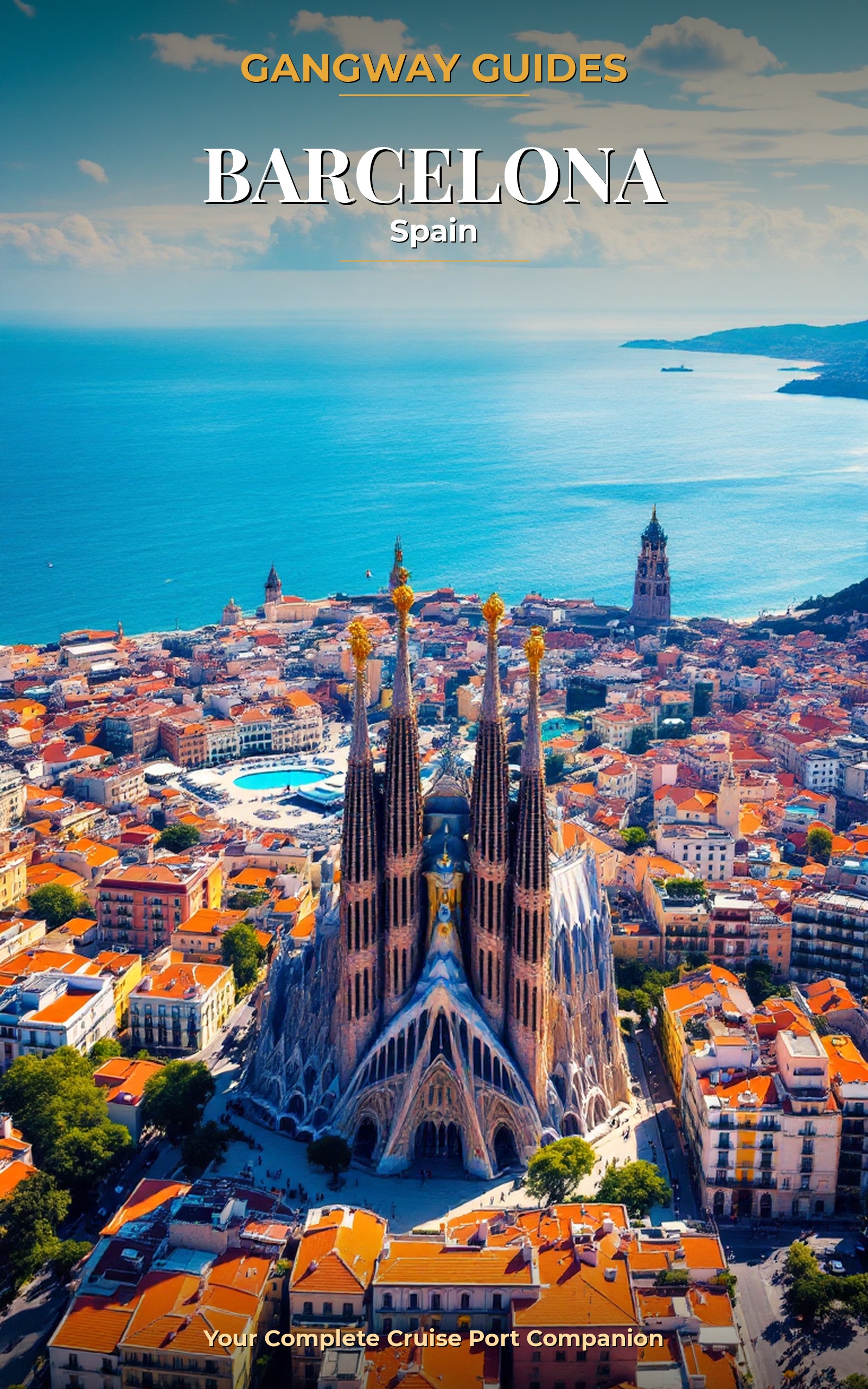
Know Barcelona Before You Arrive
Walking directions, GPS maps, real prices — everything in this article and more, organized for your port day.
Free with Kindle Unlimited
Read on Kindle, Apple Books & any e-reader
Free with Kindle Unlimited · try a free sample first