What to Pack for a Cruise Port Day: The 12-Item Checklist
By Jason Moon · February 26, 2026 · 6 min read
TL;DR (source: Visit Dubrovnik)
The essential packing list for a cruise port day in the Mediterranean or Baltic. 12 items you actually need, what to leave on the ship, and how to carry it all comfortably. (More on Walls of Dubrovnik)
The Problem with Most Packing Lists
Every cruise blog gives you a packing list of 30+ items for port days. Nobody actually carries 30 items off a ship. You end up with a bloated bag, a sore shoulder, and half the stuff untouched at the end of the day. (Dubrovnik Port Authority)
After visiting dozens of European, Atlantic island, and Caribbean cruise ports, here's the list that actually matters. Twelve items. Everything fits in a small crossbody bag or a light daypack.
The 12-Item Port Day Checklist
1. Passport (or a Photocopy)
Some ports require you to carry government-issued ID. In Turkey (Kusadasi) and non-EU countries, carry your actual passport. In EU ports, a photocopy or a photo on your phone usually suffices. Your cruise card alone is not accepted everywhere. According to Dubrovnik Port Authority, Dubrovnik received over 1.1 million cruise passengers in 2023, making it the most-visited cruise port in Croatia.

2. Your Ship Card
Non-negotiable. You need this to get back on the ship. Most cruise lines use it for onboard purchases too. Keep it in a lanyard, card holder, or dedicated pocket -- not loose in a bag where it can fall out.
3. Cash in Local Currency
Most Mediterranean ports use EUR. The exceptions: Turkey (TRY), Croatia's smaller vendors (some still prefer cash even with EUR adoption), and the Baltic ports -- Sweden (SEK), Denmark (DKK). Carry 30-50 EUR equivalent in small bills. Many places accept cards, but street vendors, small bakeries, and public toilets often don't.
Withdraw cash from an ATM at the port, not from your ship's exchange desk (which charges brutal rates). Use a travel card like Wise to avoid foreign transaction fees.
4. One Debit or Credit Card
A card with no foreign transaction fees. Visa and Mastercard are accepted almost everywhere in Europe. Amex is hit-or-miss. Leave the rest of your cards on the ship in your cabin safe.
5. Phone (With Offline Maps Downloaded)
Download your port's Google Maps or Maps.me area for offline use before you leave the ship. Port Wi-Fi is unreliable, and data roaming costs add up fast. If you have an eSIM, even better -- but don't rely on it as your only navigation option.
6. Sunscreen (Travel Size)
Mediterranean sun in June-September is no joke. SPF 30 or higher, applied before you leave the ship and reapplied every 2 hours. A 50ml travel tube costs 4-6 EUR at home; the same product at a port-side pharmacy costs 8-12 EUR.
7. A Refillable Water Bottle
Tap water is drinkable in most European cruise ports (Greece, Italy, Spain, France, Croatia, Malta, Scandinavia, Estonia). Fill up before you leave the ship and refill at public fountains. A 500ml bottle of water at tourist sites costs 2-4 EUR. Over a 7-day cruise, a water bottle saves you 20-40 EUR easily.
Exception: Don't drink tap water in Turkey. Buy bottled.
8. A Light Scarf or Shawl
Required for entering churches and mosques (shoulders and knees must be covered). In Rhodes, Corfu, Valletta, and especially Kusadasi (for mosque visits), you'll be turned away without covered shoulders. A lightweight scarf weighs nothing and solves the problem for both men and women.
9. Comfortable Walking Shoes
Not sandals. Not flip-flops. Proper closed-toe shoes with grip. Mediterranean cobblestones are uneven and slippery. The fortress climb in Kotor has 1,350 steps. Dubrovnik's city walls are 2 km of uneven stone. Santorini's donkey path is steep and occasionally covered in droppings. You want shoes that grip.
10. A Small First Aid Kit
Three items: adhesive bandages (blisters happen by hour three of walking on cobblestones), ibuprofen, and any personal medications. That's it. You're not performing surgery; you're covering blisters and headaches.
11. A Portable Charger (Power Bank)
Your phone is your map, camera, translator, and ride-hailing app. A dead phone in an unfamiliar port is genuinely stressful. A 10,000mAh power bank (20-25 EUR, weighs 200 grams) gives you two full charges and lasts an entire port day.
12. A Crossbody Bag or Anti-Theft Daypack
A crossbody bag worn across the front of your body is the most secure and comfortable option. It keeps your valuables visible and accessible while leaving your hands free. Avoid backpacks in crowded areas like Naples or Barcelona where pickpockets target them.
What to Leave on the Ship
- Jewelry: Leave it in your cabin safe. You don't need it, and it makes you a target.
- Multiple credit cards: One card is enough. If it's lost or stolen, you have backups in your safe.
- Full-size toiletries: Sunscreen is the only toiletry you need ashore.
- Laptop or tablet: Unless you're working, leave it. Your phone handles everything.
- Guidebooks: Their information is on your phone already.
The Bag Itself
A crossbody bag with a zip closure is the gold standard for cruise port days. It sits across your chest, keeps your hands free, and is harder for pickpockets to access than a backpack. Look for one with an RFID-blocking pocket for your cards -- not because RFID theft is common, but because it's one less thing to think about.
Withdraw cash from an ATM at the port, not from your ship's exchange desk (which charges brutal rates). Use a travel card like Wise to avoid foreign transaction fees.

If you prefer a backpack, wear it on your front in crowded areas (markets in Naples, Las Ramblas in Barcelona, the Grand Bazaar side streets near Kusadasi). A backpack on your back in a crowded Mediterranean market is an open invitation.
Port-Specific Additions
For certain ports, add one or two items to the base list:
- Swimsuit and quick-dry towel: For beach ports like Mykonos, Rhodes, or Corfu
- Binoculars: For scenic sail-ins like Kotor's Bay or Stockholm's archipelago approach
- Rain jacket: For Baltic ports (Helsinki, Tallinn, Copenhagen) where rain is possible any time of year
That's the list. Twelve items, one small bag, zero stress. Now go explore.
Based on our personal visits and research, we have compiled the most common questions below.
| Tip | Detail |
|---|---|
| Arrival time | Ships typically dock 7–8 AM |
| Walk to center | 10–30 minutes (port dependent) |
| Must-bring | Comfortable shoes, water, sunscreen |
| Cash needed | 20–50 EUR for small purchases |
| Return by | 30 minutes before all-aboard time |
Based on our personal visits and research, we have compiled the most common questions below.
Frequently Asked Questions
Is this port walkable from the cruise terminal?
Most Mediterranean cruise terminals are within 5-30 minutes walk of the main attractions. The walking distance and route quality vary by port. Our detailed port guides include step-by-step directions from the terminal with estimated walking times.
How much time do you need at this port?
Most cruise ships give you 6-10 hours in port. The itineraries in our guides are designed to fit within a standard port call, with options for both half-day and full-day explorations depending on your ship's schedule.
Know Dubrovnik Before You Arrive
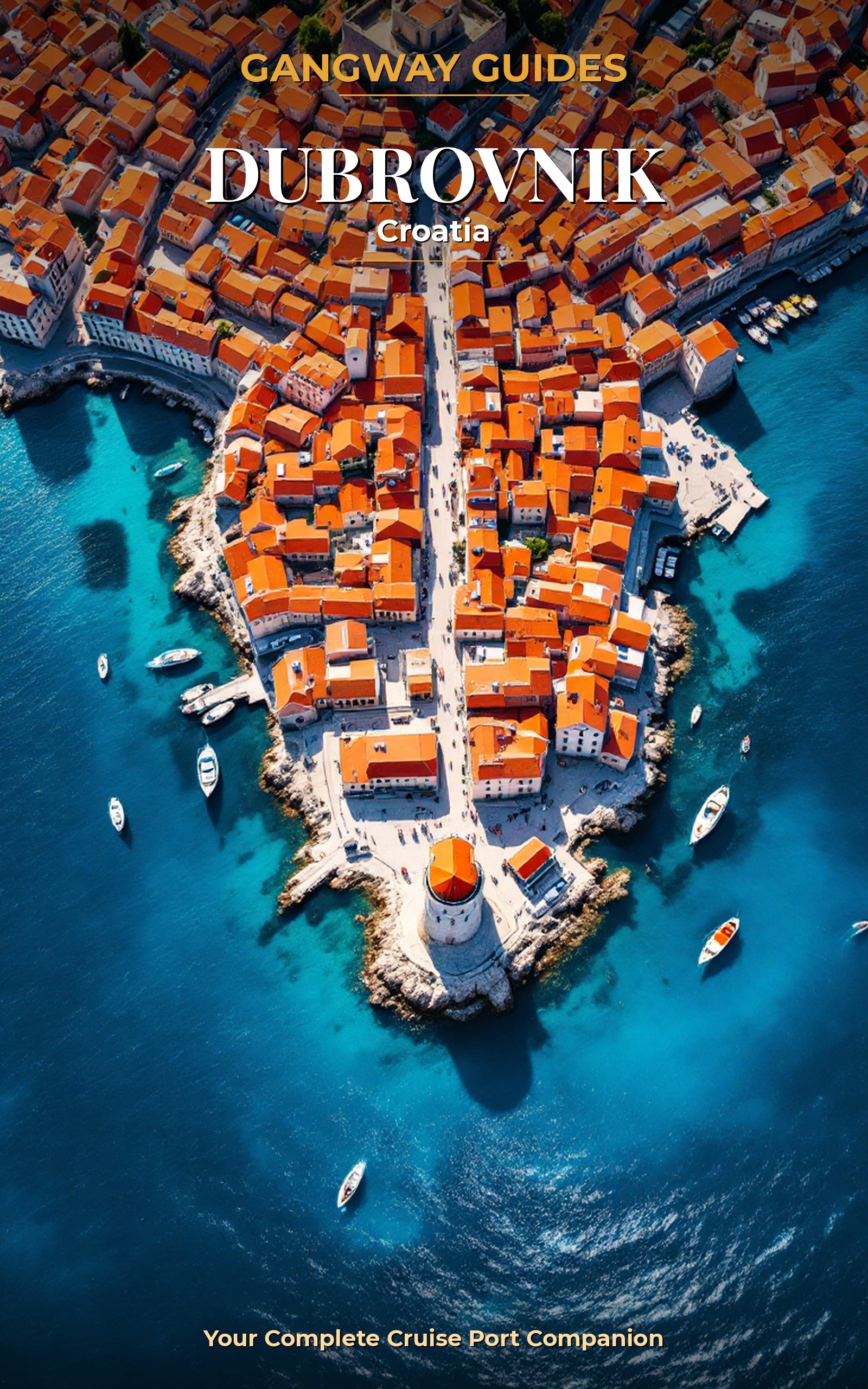
Walking directions, GPS maps, real prices — everything in this article and more, organized for your port day.
Free with Kindle Unlimited
Read on Kindle, Apple Books & any e-reader
Free with Kindle Unlimited · try a free sample first