Best Shopping at Mediterranean Cruise Ports: What to Buy Where
By Jason Moon · April 29, 2026 · 9 min read
TL;DR
Best shopping by port: Venice (Murano glass, Venetian leather), Athens (olive oil, herbs, ceramics), Barcelona (Gaudi-inspired design, Catalan food), Valletta (Mdina glass, lace, Maltese Cross jewelry), Dubrovnik (Maraschino products, Plavac Mali wine), Split (Dalmatian olive oil, lavender from Hvar), Santorini (Assyrtiko wine, local honey, volcanic cosmetics). Buy regionally specific things; skip generic Mediterranean souvenirs available everywhere.
What Makes a Cruise Port Souvenir Worth Buying?
There are two kinds of cruise port shopping. The first: things in every port — mass-produced keychains, generic Mediterranean graphics, items you can buy at any airport. The second: things that only exist (or are significantly better or cheaper) at that specific port. The second kind is worth your money and carry-on space. The first is not.
The guides below focus on regionally specific products — food, wine, glass, textiles, and crafts that are genuinely made in or near the port. We've bought most of them ourselves.
What Should You Buy in Venice?
Murano glass is the iconic Venice souvenir — hand-blown glass made on the island of Murano since the 13th century. The problem: much of what's sold in Venetian tourist shops is made in China. Genuine Murano glass carries the Vetro Artistico Murano trademark, a sticker with a serial number. Pieces range from €15 for small figurines to €500+ for chandeliers. If buying a significant piece, ask for the trademark certificate.
Venetian marbled paper (carta marmorizzata) is another excellent buy — used for journals, bookbinding, boxes, and stationery, produced using a technique where pigments are floated on water and paper drawn through. Prices: €8-25 for a journal, €3-8 for sheets. Look for workshops along Calle del Carbon near the Rialto or in the Dorsoduro neighborhood.
What Should You Buy in Athens?
The Athens Central Market on Athinas Street has stalls selling excellent Kalamata olive oil, dried herbs from Crete and the Peloponnese (oregano, thyme, mountain tea), honey, and dried figs. A 500ml bottle of premium extra-virgin olive oil costs €8-15 — significantly cheaper than equivalent quality at home and better for being fresh. The Monastiraki flea market has antique and replica classical ceramics, plus some genuine mid-century pieces at negotiable prices.
For jewelry, the Plaka neighborhood has shops selling handmade pieces in classical Greek motifs — evil eye pendants (mati), gold-leaf designs, silver pieces. A genuine sterling silver mati bracelet runs €15-35 at a reputable shop; avoid anything suspiciously cheap in the immediate tourist zone around the Acropolis entrance.
What Should You Buy in Barcelona?
La Boqueria is famous but, as noted in our Barcelona food guide, mostly tourist-priced. For genuine Catalan products at fair prices, try the Mercat de Santa Caterina in the El Born neighborhood — same quality products (Catalan cheeses, charcuterie, olive oil), lower prices, dramatically fewer tourists. Budget €20-40 for a good Catalan food shop.
For design, Vinçon (or its successors in the Eixample neighborhood) carries Spanish and Catalan design goods. FC Barcelona merchandise at the official store is predictably popular with football fans. The Gothic Quarter has several good independent jewelry and design shops on Carrer del Call and adjacent streets.
What Should You Buy in Valletta?
Maltese glass is produced in the ancient city of Mdina (15 km from Valletta) and sold throughout the island — distinctive for its cobalt, amber, and green colors with air-bubble patterns. A glass piece runs €15-80 depending on size and complexity. The Mdina Glass workshop allows visitors to watch production; pieces sold there are authentic. Avoid cheap glass "souvenirs" in tourist shops near Valletta harbor — they're often imports.
Traditional Maltese lace (bizzilla) is painstaking handmade needle or bobbin lace, mostly made by older Gozitan women. Genuine pieces are expensive (€30-200+ for a substantial piece) and rare; most lace sold in tourist shops is imported. If purchasing genuine bizzilla, buy from the Malta Crafts Council or directly from verified producers.
What Should You Buy in Dubrovnik?
Plavac Mali wine from the Pelješac peninsula is the only genuinely worthwhile bottle to carry home from Dubrovnik — it doesn't travel internationally much and it's significantly cheaper at source. A good bottle from a reputable Pelješac producer (Miloš, Bura-Mrgudić, Saints Hills) runs €15-30. The Old Town has several wine shops with reasonable selections; avoid the tourist-facing shops immediately inside the Old Town gates, which add 30-50% markup.
Maraschino cherry liqueur (connected to the Zadar tradition) is available in Dubrovnik and makes an authentic and portable souvenir. Travarica (herb grappa, the Croatian national spirit) is sold at similar prices and travels well.
"We've learned to budget for one 'proper' purchase at every port — something that took craft to make and is genuinely from here. In Venice it was a hand-bound journal. In Athens, half a liter of Kalamata oil that we actually cooked with when we got home. In Valletta, a piece of Mdina glass that still sits on the kitchen windowsill. None of these cost more than €30-40. All of them are still worth looking at."
Pro Tip
Liquid souvenirs (olive oil, wine, liqueur) are only viable in checked luggage — they're prohibited in carry-on bags through airport security. If your cruise ends and you fly home, pack them in your main luggage inside a sealed plastic bag (leakage protection). Most well-made bottles survive this without problem; consider bubble wrap for anything fragile.
What Should You Buy in Split?
Dalmatian olive oil from the islands (particularly Brač and Hvar) is excellent and significantly cheaper bought locally than imported. A 500ml bottle of cold-press Brač olive oil costs €8-12 at the Split Green Market. Lavender from Hvar island — dried bundles, essential oil, soaps, sachets — is a classic Dalmatian souvenir that's genuinely from there and costs €3-15 depending on format. Buy from the island market vendors at Split harbor who bring products from Hvar, not from the tourist shops in the palace.
What Should You Buy in Santorini?
Santorini Assyrtiko is one of the world's great white wines — a volcanic-soil mineral expression unique to the island, and expensive enough at home to make local purchase worthwhile. A bottle at a Santorini winery runs €12-25, significantly cheaper than the same wine imported. The main wineries (Santo Wines, Domaine Sigalas, Hatzidakis) sell direct and offer tastings. Fava (yellow split pea purée, Santorini's indigenous version using specific local beans) and caperberry preserves are also excellent and packaged for travel.
| Port | Buy This | Cost Range | Where |
|---|---|---|---|
| Venice | Murano glass (with trademark) | €15-200+ | Dorsoduro / near Rialto |
| Athens | Kalamata olive oil, dried herbs | €8-20 | Central Market |
| Barcelona | Catalan charcuterie, cava | €10-30 | Mercat de Santa Caterina |
| Valletta | Mdina glass | €15-80 | Valletta city center |
| Dubrovnik | Plavac Mali wine | €15-30 | Old Town wine shops |
| Split | Dalmatian olive oil, lavender | €8-20 | Green Market |
| Santorini | Assyrtiko wine | €12-25 | Winery direct |
Can I take wine and olive oil through airport security?
No — all liquids over 100ml are prohibited in carry-on luggage through EU/UK/US airport security. Pack in checked luggage. Seal in plastic bags and wrap fragile bottles in clothing for protection. Most bottles survive checked luggage transport without issues.
Are cruise ship gift shops worth shopping at?
For specific things: duty-free alcohol and perfume (reasonable prices if you use them), and sometimes port-specific items if they're sourced locally. For general souvenirs: no — they're usually generic and overpriced compared to buying directly at port. Use port time for actual local shopping.
What should I absolutely not buy at a cruise port?
Anything claiming to be an original ancient artifact (illegal to purchase or export Greek, Turkish, or Italian archaeological material), leather goods at the airport-style shops directly at the port gates (price-quality ratio is poor — if you want good leather, go to a city center shop), and any "local" craft item without a provenance story you can verify.
Frequently Asked Questions
What are the best things to buy at Mediterranean cruise ports?
Leather goods in Kusadasi (Turkey), olive oil and honey in Kotor and Split, hand-painted ceramics in Dubrovnik and Santorini, high-quality saffron in Barcelona's La Boqueria, Greek spirits (tsipouro, Metaxa) in Athens, and Murano glass in Venice. Focus on food items and small ceramics — they travel well and represent genuine local production rather than imported souvenir tat.
Are prices negotiable at Mediterranean cruise port markets?
In Turkish ports (Kusadasi, Istanbul) negotiation is expected — start at 50-60% of the asking price and work up. In Croatian markets (Split, Dubrovnik), gentle negotiation for multiple items is acceptable but fixed prices are more common. In Greek and Italian markets, haggling is generally not expected and may cause offense at established shops. Street stalls and bazaars have more flexibility than boutiques everywhere.
Is it safe to buy gold and jewelry at cruise ports?
Exercise caution. Greece and Turkey are known for jewelry, and quality ranges from genuine 18K pieces to low-grade plated items sold as gold. Always check the hallmark stamp (585 = 14K, 750 = 18K) and buy from shops with clear fixed prices and receipts — not market stalls. A reputable Athens jeweler like those on Voukourestiou street is safer than a cruise-port quick-sale shop near the pier.
Should I use cash or cards for shopping at Mediterranean ports?
EU ports (Greece, Croatia, Spain, Italy, France) accept cards widely, including contactless. Turkey and non-euro EU ports may be more cash-reliant at markets and smaller stalls. Keep €50-100 in local currency for markets, street food, and smaller purchases. Notify your bank before your cruise to avoid card blocks. Currency exchange at ports is generally poor — use ATMs and withdraw before visiting markets.
In our experience, the best cruise-port shopping is regional, small, and easy to carry. We found that food, glass, wine, ceramics, and textiles outperform generic souvenirs when they are tied to the port itself. (Visit Greece)
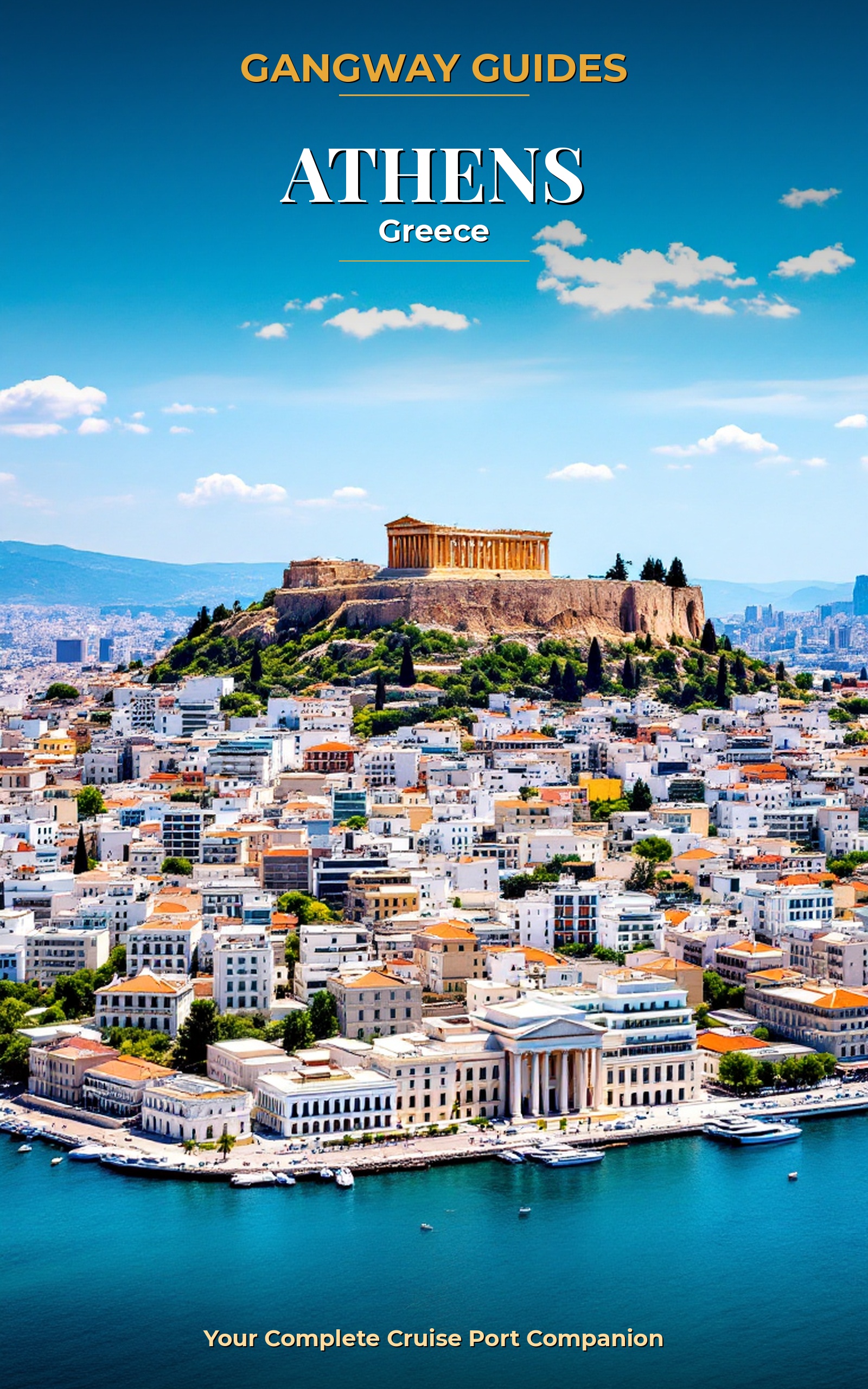
Know Athens Before You Arrive
Walking directions, GPS maps, real prices — everything in this article and more, organized for your port day.
Free with Kindle Unlimited
Read on Kindle, Apple Books & any e-reader
Free with Kindle Unlimited · try a free sample first